1
Federate every discipline
Navisworks
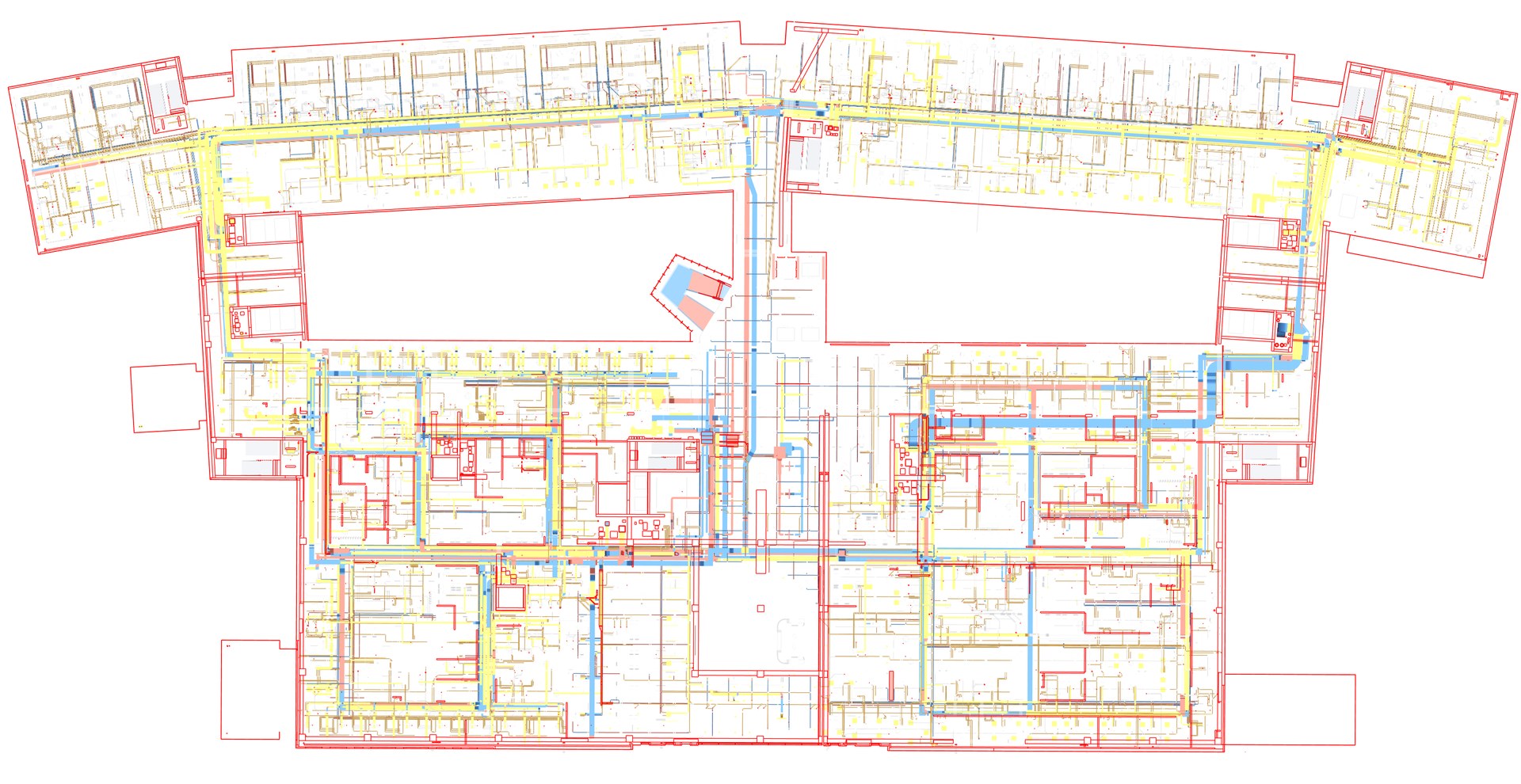
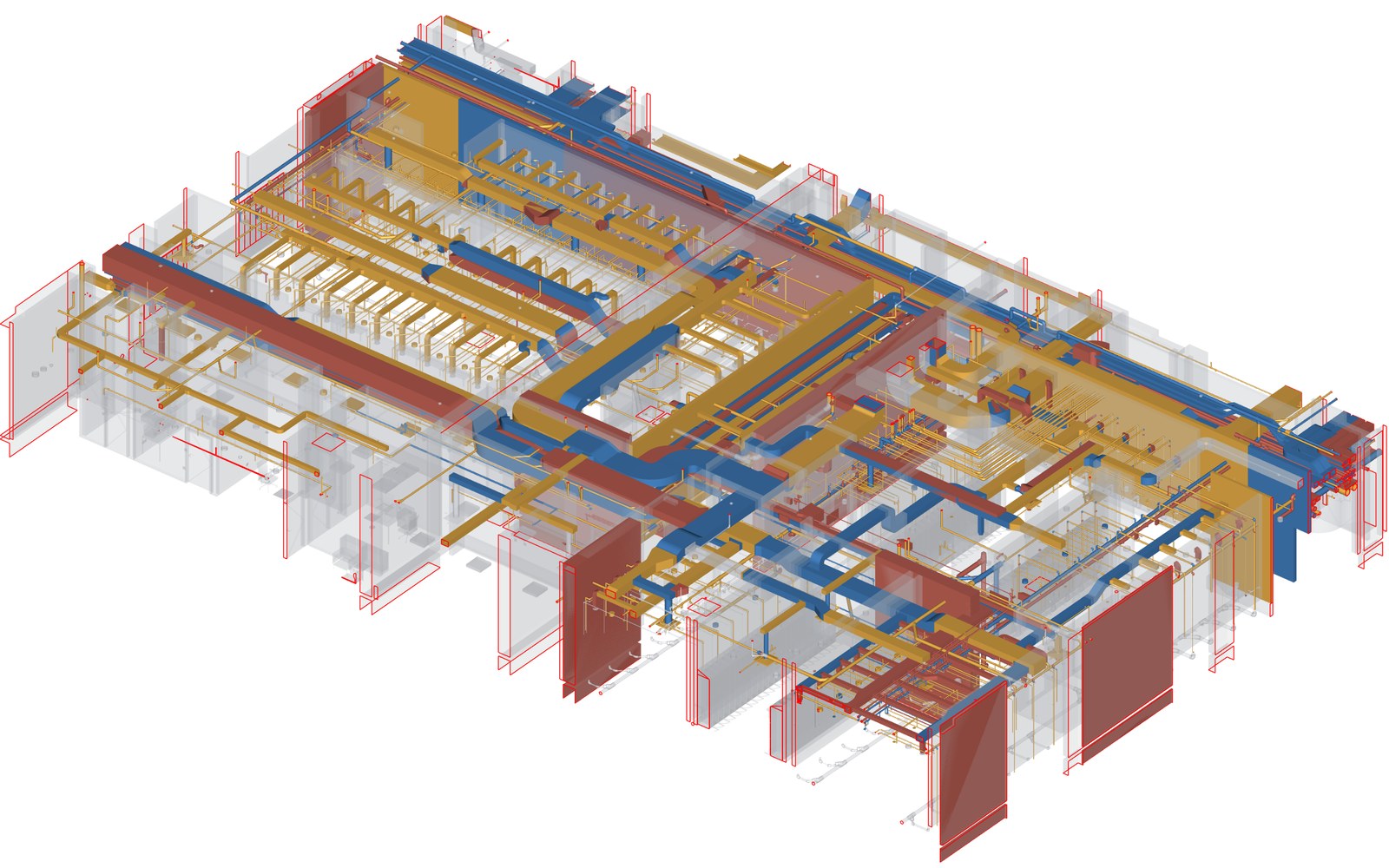
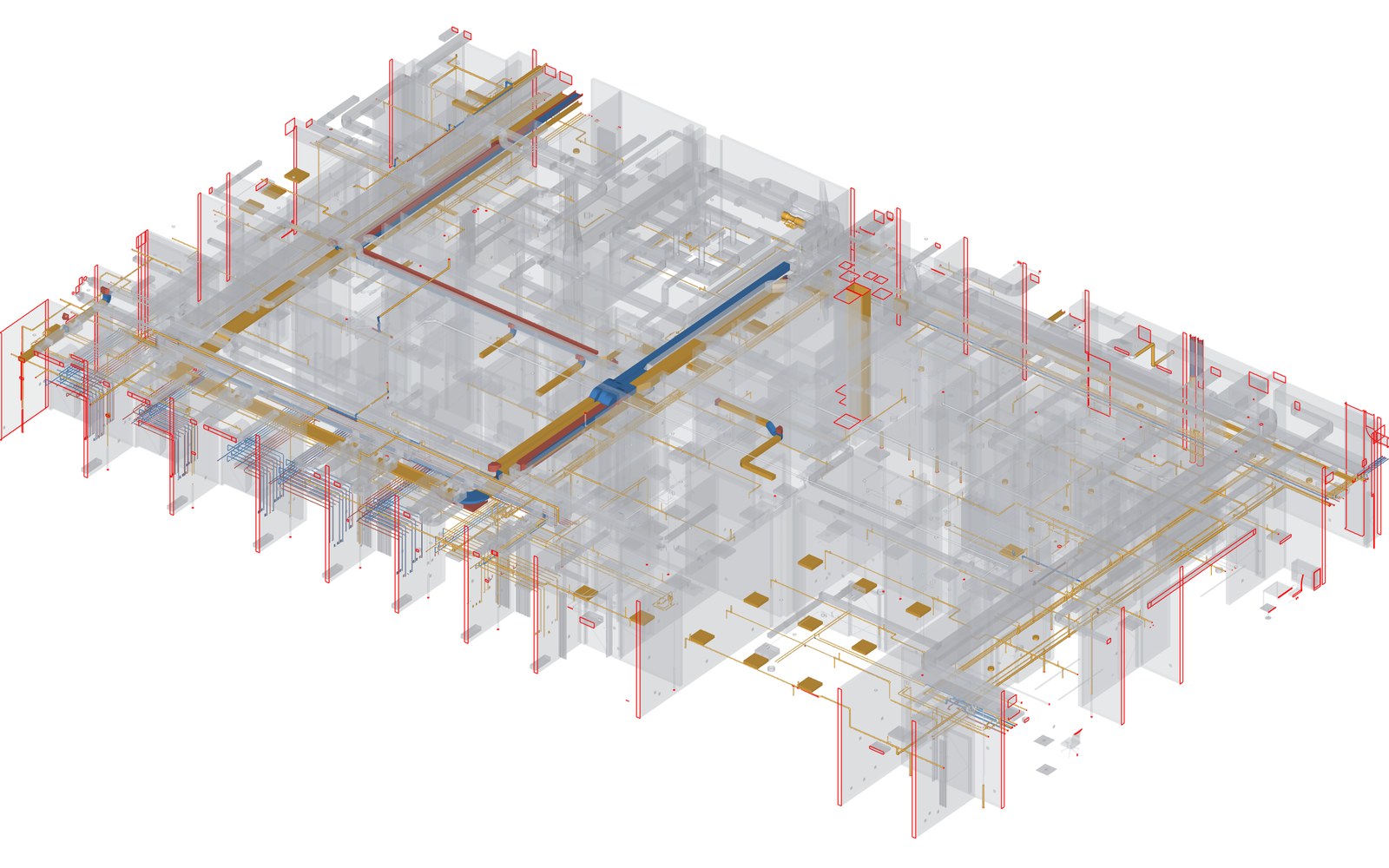
Twelve design models from architecture, structure and every MEP discipline brought into one federated Navisworks model. Nothing is reviewed in isolation, because most of the expensive problems on a hospital sit at the interface between two trades.
2
Test against 49 engineering rules
Clash detection
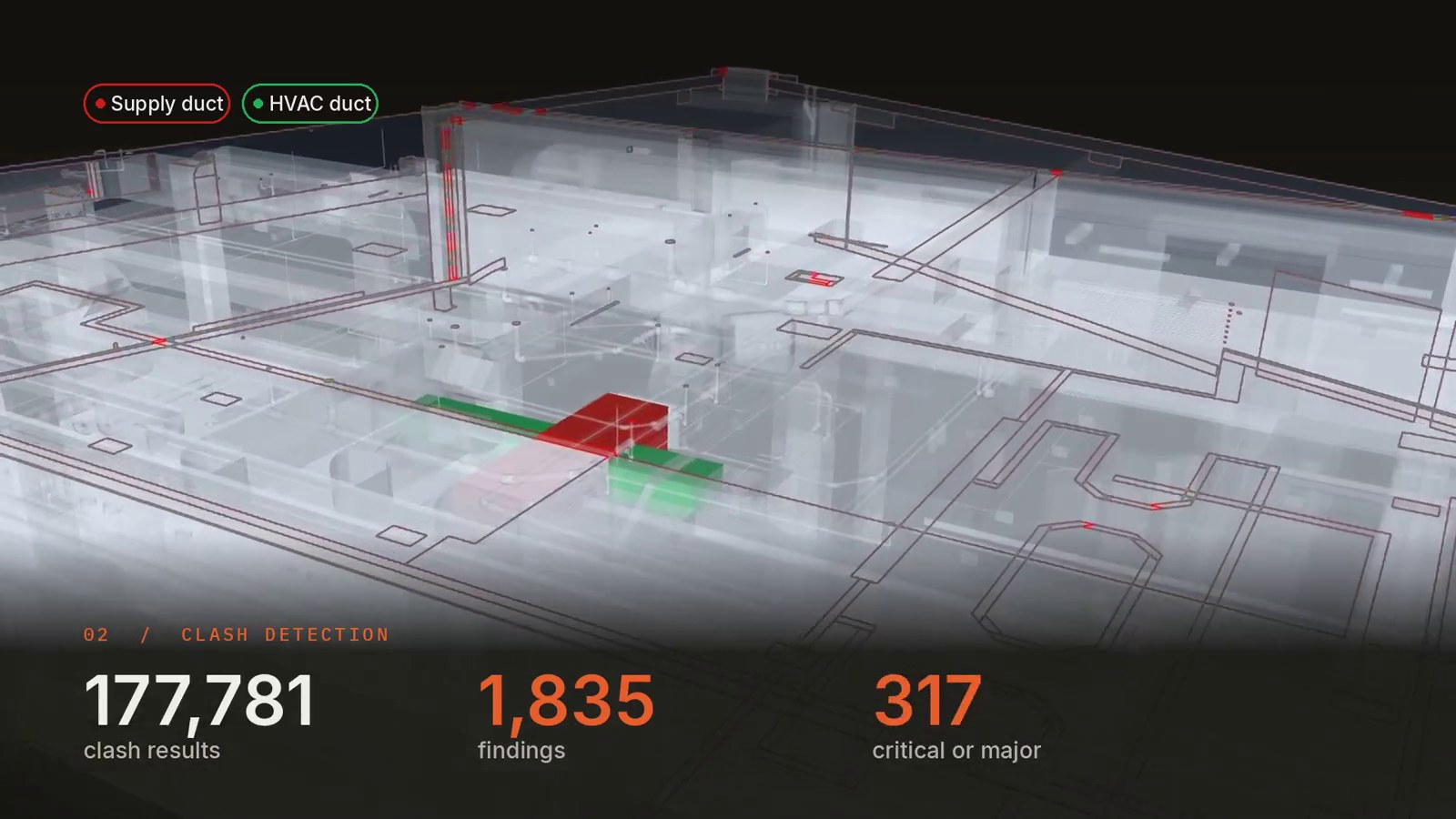
A hard clash test only tells you two objects touch. The review ran 49 rules that reflect how each discipline is built and maintained: clearances to structure and services, maintenance access to equipment, sleeves and openings through RC walls, beams and slabs, terminals against ceilings, services through partitions and doors, and setting out. 177,781 raw results were reduced to 1,835 located and illustrated findings, 317 of them critical or major.
3
Classify by who resolves it
Severity and ownership
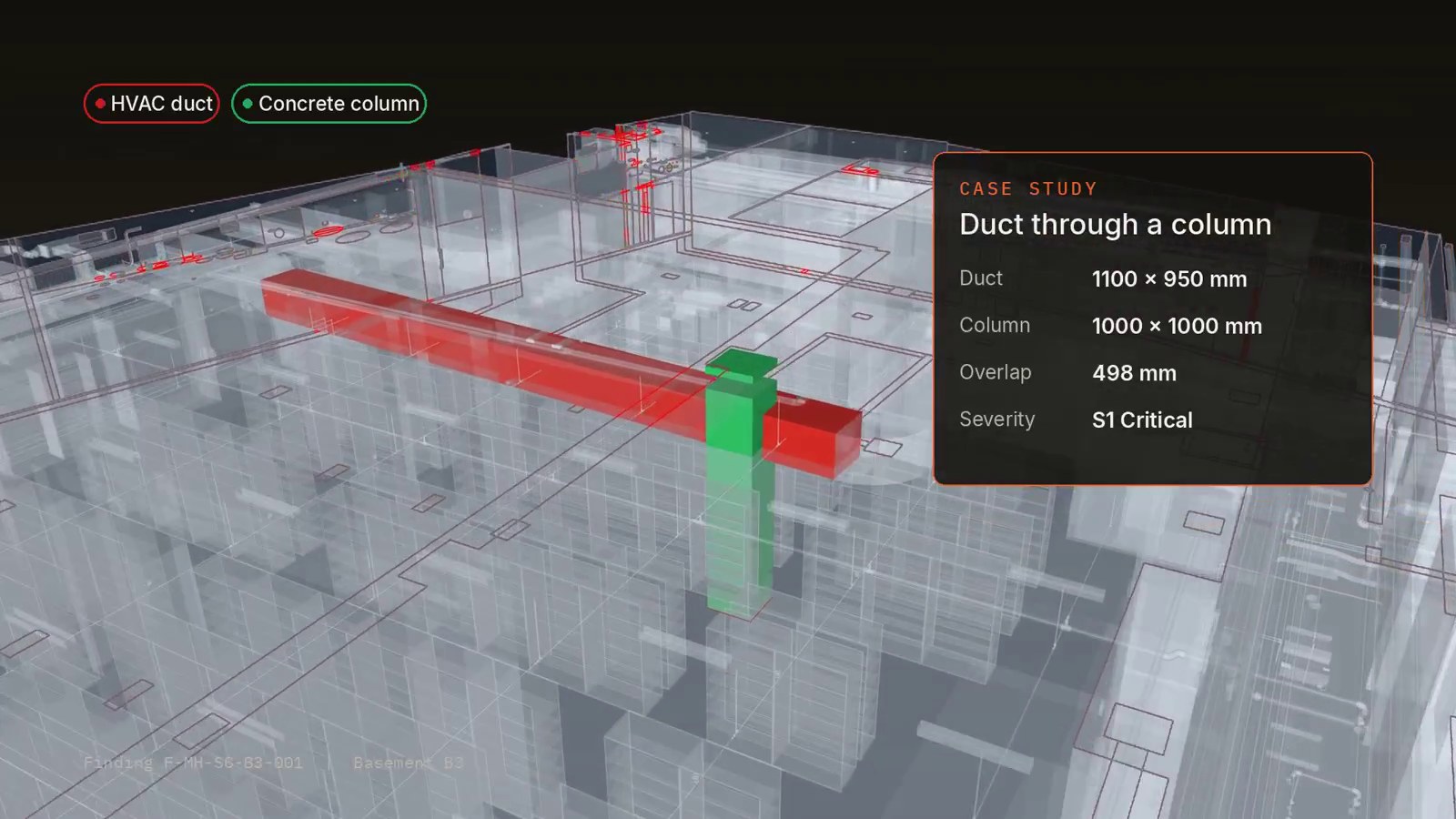
Every finding is classified by severity and by stage: a design issue for the designer, an interface issue between trades, or a construction item for the contractor. Around 36 percent sit at design stage, where they are cheapest to fix. Here, a 1,100 by 950 mm HVAC duct runs straight through a 1,000 by 1,000 mm concrete column at basement B3, raised as one design correction before anything is built.
4
Assess the level of development
LOD matrix
353,935 elements checked against the project LOD matrix, so the client knows not only whether the model coordinates but whether it carries the geometry and information the stage requires. The output is an LOD assessment report with a register that can be tracked from issue to issue.
5
Track what changed between issues
Model comparison
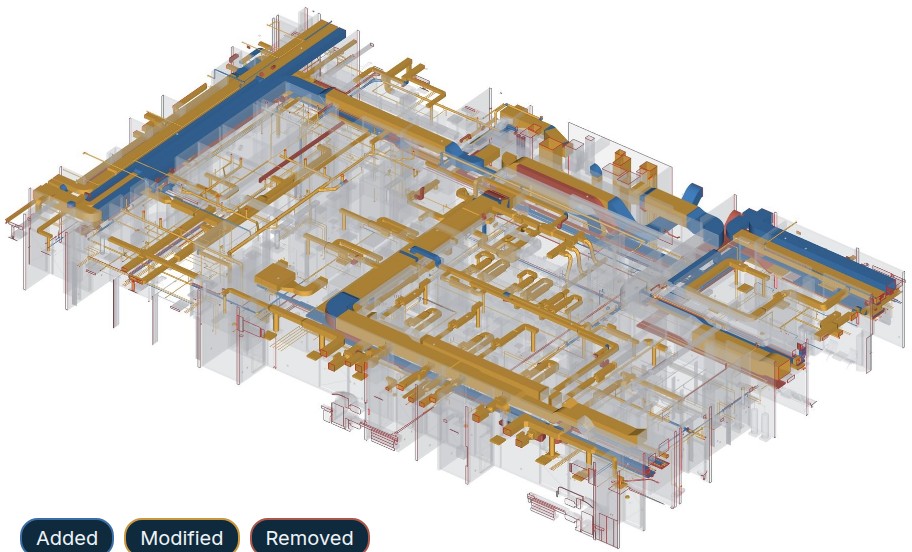
When the next design issue arrived, the two versions were compared element by element. 253,918 changes were identified as added, modified or removed and mapped by level, delivered as a change report and register within seven days of receiving the package.
6
Deliver findings that can be closed
Reports and registers
Clash detection reports for every test, a consolidated clash register, the LOD assessment report and register, a visual summary, the model change report and change register, and a model evidence record. Each finding is located, illustrated and assigned, so it can be closed rather than just counted.